Location permission is blocked. Please enable location access.
Amar Radiohttps://www.amarradio.com/s/64c8db09821840e583be8160/66cd698c3c359005ac7e5c88/arclogo-480x480.png
73/19/5, Ashokapuram Main Rd Yeshwanthpur Industrial Suburb Bangalore – 560022, India | GST No. : 29AADFA3109M2ZF560022BengaluruIN
Amar Radiohttps://www.amarradio.com
73/19/5, Ashokapuram Main Rd Yeshwanthpur Industrial Suburb Bangalore – 560022, India | GST No. : 29AADFA3109M2ZFBengaluru, IN
+919902344474https://www.amarradio.com/s/64c8db09821840e583be8160/66cd698c3c359005ac7e5c88/arclogo-480x480.png"[email protected]SCRs<p></p>
<div class="flex max-w-full flex-col flex-grow">
<div data-message-author-role="assistant" data-message-id="c8b1b38a-562c-413d-9953-6932d1b1a411" dir="auto" class="min-h-8 text-message relative flex w-full flex-col items-end gap-2 whitespace-normal break-words text-start [.text-message+&]:mt-5" data-message-model-slug="gpt-4o">
<div class="flex w-full flex-col gap-1 empty:hidden first:pt-[3px]">
<div class="markdown prose w-full break-words dark:prose-invert dark">
<p data-start="0" data-end="424" data-is-last-node="" data-is-only-node="">An SCR (Silicon-Controlled Rectifier) is a four-layer, three-terminal semiconductor device used for high-power switching and rectification. It acts as a latching switch, turning on with a gate pulse and staying on until current drops below a threshold. SCRs are widely used in motor controls, voltage regulators, power supplies, and industrial automation due to their high efficiency and reliability.</p>
</div>
</div>
</div>
</div>https://www.amarradio.com/en/browse/scrshttps://www.amarradio.com/s/64c8db09821840e583be8160/68b52fb34cbd5cadae0a5220/scrs.webp



Select a location
Use your current location
— OR — Locate on Map
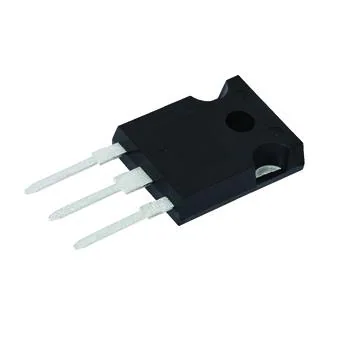
SCRs
An SCR (Silicon-Controlled Rectifier) is a four-layer, three-terminal semiconductor device used for high-power switching and rectification. It acts as a latching switch, turning on with a gate pulse and staying on until current drops below a threshold. SCRs are widely used in motor controls, voltage regulators, power supplies, and industrial automation due to their high efficiency and reliability.
Showing 1 product
thyristorsdiscrete-semiconductors
Categories
- Contactors
- Controllers
- Human Machine Interface - HMI
- Network & Communications
- Industrial Relays & Accessories
- Motors & Motion
- Industrial Switches
- Industrial Lighting & Indication
- Industrial Safety
- Field I/O
- Electrical Products
- Panel Meters
- Industrial Sensors
- Industrial Computing
- Industrial Power
- Industrial Enclosures
- Industrial Connectors
- Industrial Terminal Blocks
- Wire & Cable
Show More
Price
₹
-₹
Customer Rating
_brand
Brand/Manufacturers

 Request a Quote